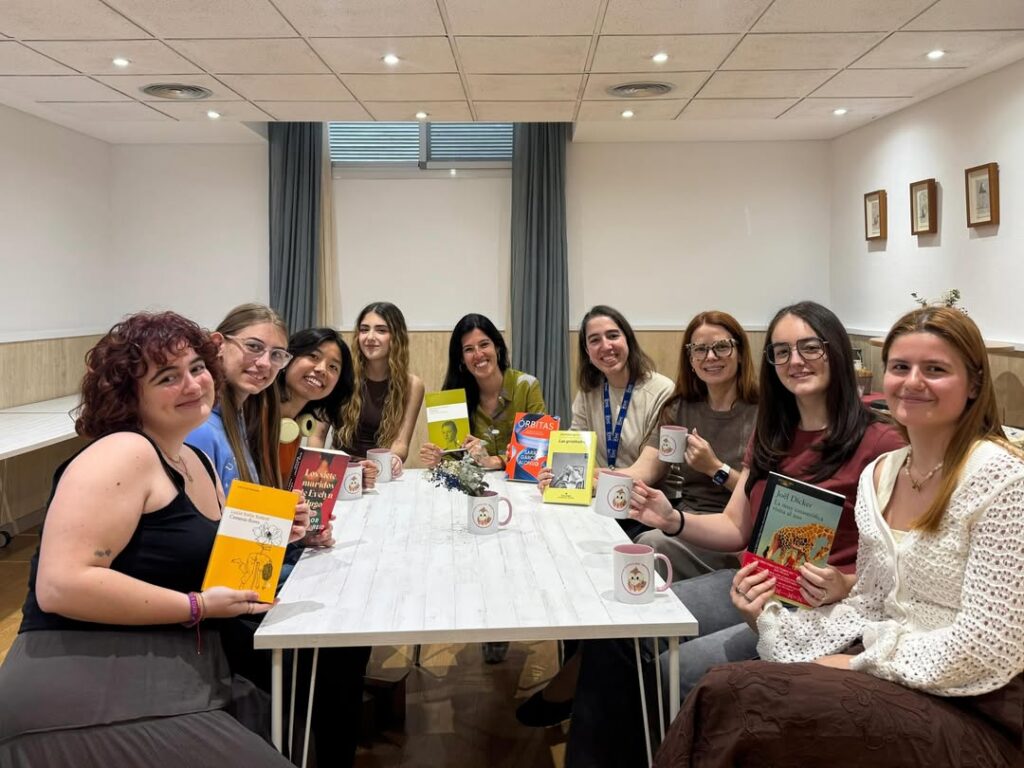
In the era of digital immediacy and information overload, finding spaces dedicated to pausing, deep reflection, and the exchange of ideas is a genuine challenge. It was with this premise that the Divina Seguros – ESIC University Chair of Analytical Thought Book Club was born—a meeting point designed not only for book lovers but for anyone interested in exercising their mind, questioning realities, and combating the information noise that surrounds us in our daily lives.
As we bring this academic cycle to a close, we look back with immense satisfaction. The discussions arising from our in-person and virtual sessions have demonstrated that literature, in any of its forms, acts as an extraordinary mirror of human psychology and the social biases that shape our environment. Analytical thinking is not honed solely by analyzing data or scientific reports; it is cultivated, in particular, when we are able to deconstruct a narrative, understand a character’s hidden motivations, and compare our interpretation with that of others.
One of the most striking findings of the PISA report is that only 2% of 15- and 16-year-old students reach the highest level, which entails “comprehending lengthy texts, grappling with abstract or counterintuitive concepts, and distinguishing between facts and opinions based on implicit cues related to the content or source of the information.” And many have difficulty reading texts longer than 400 words. The evidence leads us to propose actions that foster the habit of reading among young people. For this reason, the book club serves as a way to motivate and foster a love for using words to imagine and recreate immersive stories—but, above all, to interpret and discuss them.
Looking to the future: Next stop, new academic year.
The true value of this book club lies in the diversity of its members’ perspectives. Each session has reminded us that defending a position with sound arguments requires, above all, knowing how to listen actively, weighing the opinions of others, and—often—unlearning preconceived ideas we had taken for granted.
We would like to sincerely thank each of the students, teachers, and professionals who have enriched the gatherings with their contributions this year. We are temporarily suspending our meetings for the summer season, but the machinery of analytical thought does not stop.
See you next year. Our team is already working on selecting new titles and essays that will challenge our intellect starting next academic year. Until then, we wish you a summer filled with stimulating reading that inspires you to keep thinking for yourselves and drawing your own well-founded conclusions.
Happy summer and happy reading!